After years of absence, it is time to resume the Weekly Shonen Jump retrospectives here at Analyse It. This time, we will begin precisely with its year of creation, 1968, while simultaneously updating the articles covering the period from 1995 onwards.
The content below is based on various sources, including interviews with authors, works by editors-in-chief (such as Nishimura and Torishima), historical observations, and official data released by Weekly Shonen Jump itself. The primary source for this piece, however, is the book by Shigeo Nishimura, the magazine’s founding editor, as we will be covering the first half of 1968—leading up to the official launch of the publication in July of that year.
If both the first part (January to June 1968) and the second part (July to November 1968) achieve a good response in terms of comments and views, this series will continue. The goal is to analyze the interval between 1968 and 1995, while simultaneously covering the period from 1996 to 2025. With a central focus on Weekly Shonen Jump, we will detail the launches of every series, editorial developments, and curiosities of the era.
Shonen Book
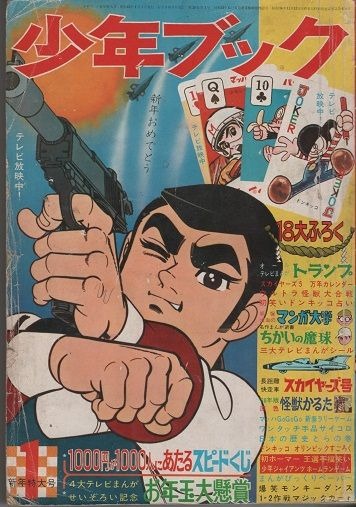
Even before the conception of Shonen Jump, its four founding members worked at another Shueisha publication: Shonen Book. This was a monthly magazine dedicated to publishing various manga aimed at a young male audience. The periodical stood out for its abundance of comedy and sports works, genres that held immense prestige among the youth of that era. It was on every kid’s lips.
The magazine achieved considerable success, serving as a birthplace for several authors who would immortalize their names in manga history. Notable figures included Fujio Akatsuka, one of the pioneers of Gag Manga (comedy); Tatsuo Yoshida, with the classic Speed Racer; and Osamu Tezuka, the “God of Manga,” who published various iconic works in Shonen Book. In its final years, the publication was under the leadership of editor-in-chief Tadasu Nagano, who would later go on to found Weekly Shonen Jump.
Although it was a consolidated magazine, Shonen Book struggled to achieve the results desired by Shueisha. Nagano’s objective was precisely to turn the publication’s performance around. However, throughout his management and while observing the rise of Weekly Shonen Magazine and Weekly Shonen Sunday, the editor realized the infeasibility of turning a monthly title into a mass phenomenon: the young audience was showing a growing preference for weekly content consumption.
This trend was not restricted to the world of Japanese comics. Television series, variety shows, and even high-circulation fashion, business, and motoring magazines were adopting the weekly format. Such products enjoyed significantly higher popular acceptance, capturing the public’s attention much more effectively than any monthly periodical. It became imperative, therefore, for Shueisha to bet on its own weekly magazine.
It was time to create Weekly Shonen Jump.
Creating Weekly Shonen Jump
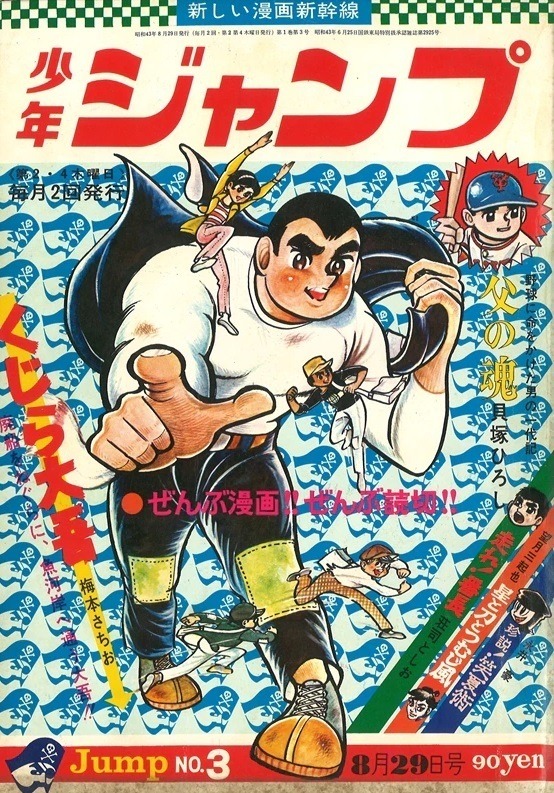
Given the scenario where the monthly magazine Shonen Book was no longer delivering expected results and struggled to compete with weekly periodicals, Tadasu Nagano—then the publication’s editor-in-chief—began planning a weekly magazine for Shueisha. However, it was imperative, first and foremost, to convince his superiors that launching another weekly magazine—in addition to Shonen Sunday—served the publisher’s interests. It is worth noting that both Shueisha and Shogakukan comprise the Hitotsubashi Group, although they operate as independent companies.
At the time, Shonen Sunday faced barriers in rivaling Shonen Magazine, which not only attracted the most prestigious authors but was also already printing Tankobon (individual volumes) of its successful series. Simultaneously, driven by an economic and population boom, Shueisha was dedicating its efforts to launching a Japanese version of the American teen magazine Seventeen. According to Shigeo Nishimura in his work “さらばわが青春の『少年ジャンプ』”, the publisher believed the latter project would be considerably more profitable.
In that same book, which serves as the primary source for this article, Nishimura reveals the statistical data for the three main weekly magazines in 1968:
| Magazine | Total Pages | Circulation | Sales Percentage | Cost Incidence |
| Shonen Sunday | 249 | 550.000 | 90% | 90.6% |
| Shonen Magazine | 234 | 765.000 | 93% | 85.6% |
| Shonen KIng | 228 | 410.000 | 85.6% | 92.6% |
With all publications sold at the price of 60 yen—an extremely low level—robust advertising support became indispensable to offset the high cost incidence.
The cost incidence is calculated by dividing the production cost by the sales price and multiplying the result by 100. Thus, for every copy of Shonen Sunday sold at 60 yen, for example, at a cost incidence of 90.6%, the publisher earned a profit of only 5.64 yen. Internal advertising was, therefore, vital for the business’s sustainability.
The obstacle of that era, which remains to this day, lay in the fact that major advertisers prioritize the 18 to 59 age group, the economically active segment of society. Advertising aimed at the teenage public offered lower remuneration, and for this reason, weekly magazines were labeled as Kanekuimushi: projects that consumed many resources and yielded low financial returns. Rival magazines were seeing an aging of the audience consuming manga (initially composed mainly of children), but even so, it was not the 18 to 59-year-old demographic.
Nishimura himself emphasizes that, even in the 90s, for weekly magazines, Tankobon sales are fundamental for survival and for reaching the necessary profit margin. However, during that period, only Shonen Magazine was able to facilitate the publication of individual volumes for its titles.
Given this scenario, and after months of persistent negotiations, Nagano secured project approval only under a bi-weekly periodicity, rather than weekly. The transition to a weekly format would occur exclusively in the event of commercial success.
As for the cover price, it was set by the sales department at 90 yen, with 30% of that value going to the store. Although Nagano aimed for a price lower than the competitors—who were about to undergo an adjustment to 70 yen—the commercial sector did not ratify his vision. Thus, with only four editors, a meager budget, and various limitations, Tadasu Nagano’s superiors authorized the project that would be named “Jump.” The name was an allusion to the expression “Hop, Step, Jump,” symbolizing a leap toward the future.
Taikan Kyoho Shugi
With the project approved, the team was formed by only four editors, all of whom came from Shonen Book, which still maintained its monthly periodicity:
Tadasu Nagano: Editor-in-Chief
Yusuke Nakano: Deputy Editor-in-Chief
Shigeo Nishimura: Editor
Hiroki Kato: Editor
These four professionals were the “celestial kings” responsible for the full conception of the magazine. Nagano implemented several guidelines that had already been validated in Shonen Book: the survival of series conditioned on public voting results, the systemic organization of editorial tasks, and more. However, Shonen Jump demanded original elements to distinguish itself in the market.
The reality, as detailed by Nishimura in his work, was that Nagano proved to be a genius with a deeply analytical profile. At the beginning of his editorial career, Nishimura tended to act on instinct, but he learned from Nagano to ground all his professional decisions in numbers and evidence. Nagano, a direct man of few words, instilled confidence in the team by constantly demanding as much market data as possible. Nishimura, Nakano, Kato, and the other Shonen Book collaborators conducted incessant field research to provide information that allowed Nagano to make decisions in the most coherent and well-founded manner.
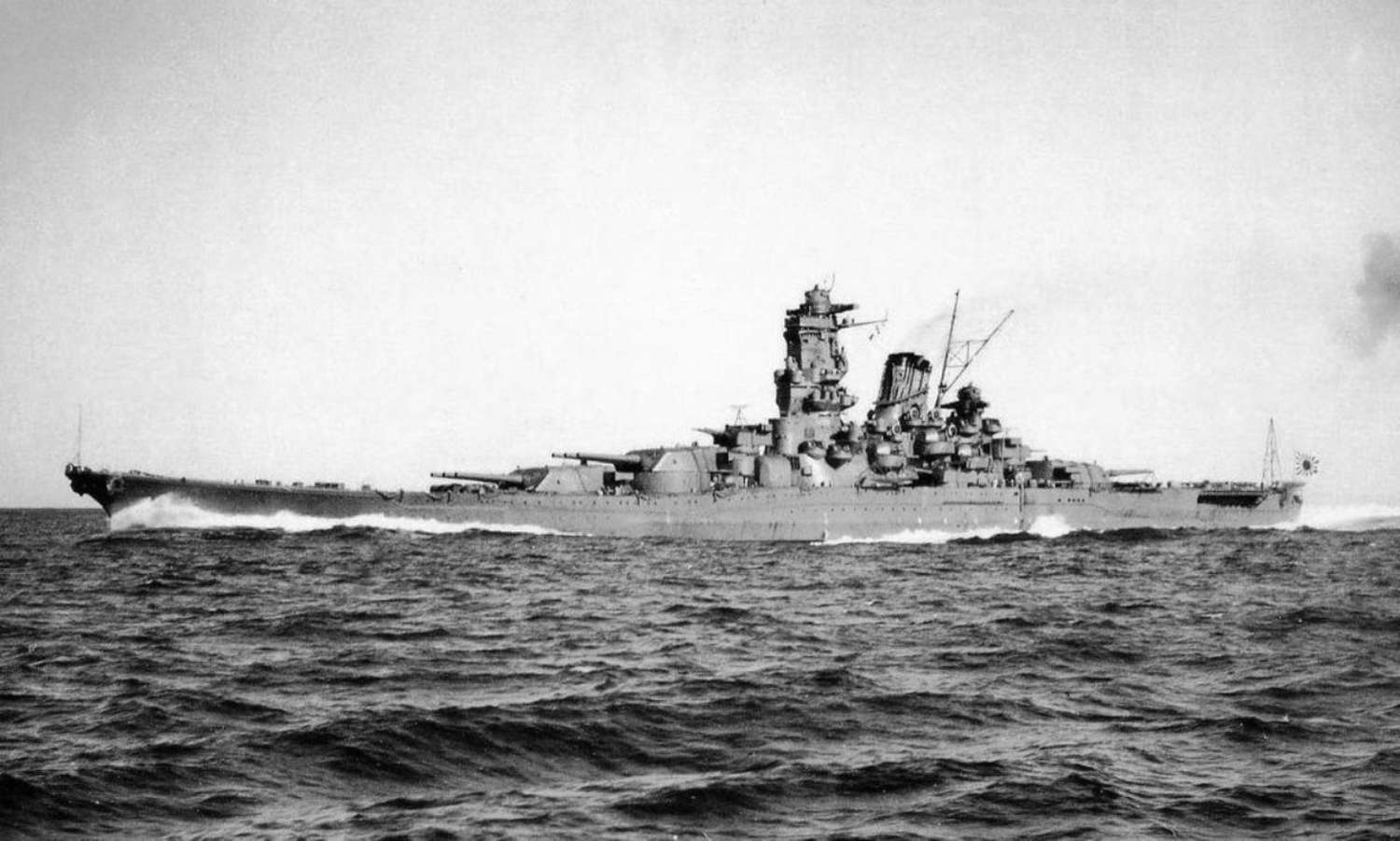
Armed with this data, the editor-in-chief adopted the doctrine of “Big Ships, Big Guns” (Taikan Kyoho Shugi) as an editorial philosophy. In short, it was about delivering an innovative, high-quality product that gathered the industry’s most prestigious names right at its debut. The goal was to confront Shonen Magazine directly, capturing its reader base’s attention.
Thus, editors Kato and Nishimura were tasked with contacting the market’s leading figures: Osamu Tezuka, Tetsuya Chiba, Noboru Kawasaki, among other prominent authors of the time.
The magazine also introduced structural changes compared to its competitors. Based on research, Nagano noticed a massive public interest in comics and thus launched the first weekly magazine composed 100% of manga. Unlike its rivals, which still allocated 25% of their space to interviews and games, Jump would focus on original and vibrant stories, distinct from anything seen in other Shonen publications.
The length of the magazine, at 250 pages, also exceeded the market average. Although this increased production costs and, consequently, the final price, offering more content created a perception in the consumer of a “premium” product, even if it came from a publisher less renowned than Kodansha.
With the plan structured, it was time to begin execution… However, despite all his experience and vision, Nagano had underestimated the obstacles along the way.
Recalculating the Route
Despite the existence of a sales department, Yusuke Nakano was required, by Nagano’s decree, to master expense calculations as soon as the department’s budget and the magazine’s cover price were stipulated by Shueisha. The editor-in-chief believed that an editor should be able to understand the logic of production and spending in order to properly defend editorial interests. Editors who only thought about the creative side of “manga” production, without understanding calculations and the market, would never grow in their careers.
During this period, Nakano delved into the costs of printing, binding, payroll, meeting logistics, and all indirect sector calculations. Following Nagano’s instructions, the deputy editor-in-chief prepared a preventive balance sheet for the editorial department using a soroban (as electronic calculators were not yet widely used).
The obstacle lay in the projection that, should the magazine present a cost incidence of 85%—the level expected for a newly launched product—there would remain only, that’s right, only 4,000 yen for the editorial expenses of each page. This amount had to include: manuscript acquisition, design costs, plate preparation, editor transportation, and Kousai-hi (funds intended for socializing with artists, covering everything from pre-meeting courtesies to negotiation dinners, always paid for by the publisher).
By excluding the value of the manuscripts—the element considered most “negotiable”—Nakano was faced with an alarming reality: each issue would have a fixed cost of 250,000 yen.
Expense Breakdown (Excluding Manuscripts):
Editor Transportation: 100,000 yen
Meetings with Authors: 50,000 yen
Design: 50,000 yen
Plates: 30,000 yen
Miscellaneous Expenses: 20,000 yen
Total: 250,000 yen
Considering that the magazine would have 250 pages, the production cost would be 1,000 yen per page, leaving only 3,000 yen for the authors’ remuneration. For comparison, Ribon (Shueisha’s shoujo magazine) allocated 8,000 yen per page, while Shonen Book operated with 6,000 yen. Therefore, the budget of 4,000 yen (with only 3,000 for manuscripts) proved insufficient to attract the intended veteran authors, whose manuscripts would vastly exceed this ceiling.
A publication composed exclusively of established names became, technically, unfeasible. Faced with the impossibility of hiring even a single high-profile author, Nagano and Nakano concluded that, to make the project financially sustainable, it would be necessary to launch two rookie authors for every mid-tier veteran author present in the magazine.
From this financial necessity, the essence of Weekly Shonen Jump was born: a magazine that, instead of betting on the prestige of veterans, would place its bets on the potential of new talent.
The Months Before the Launch
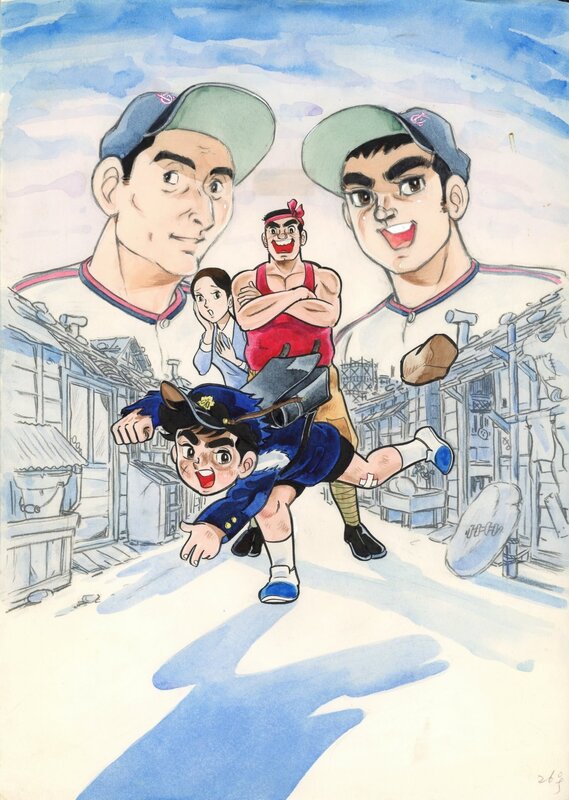
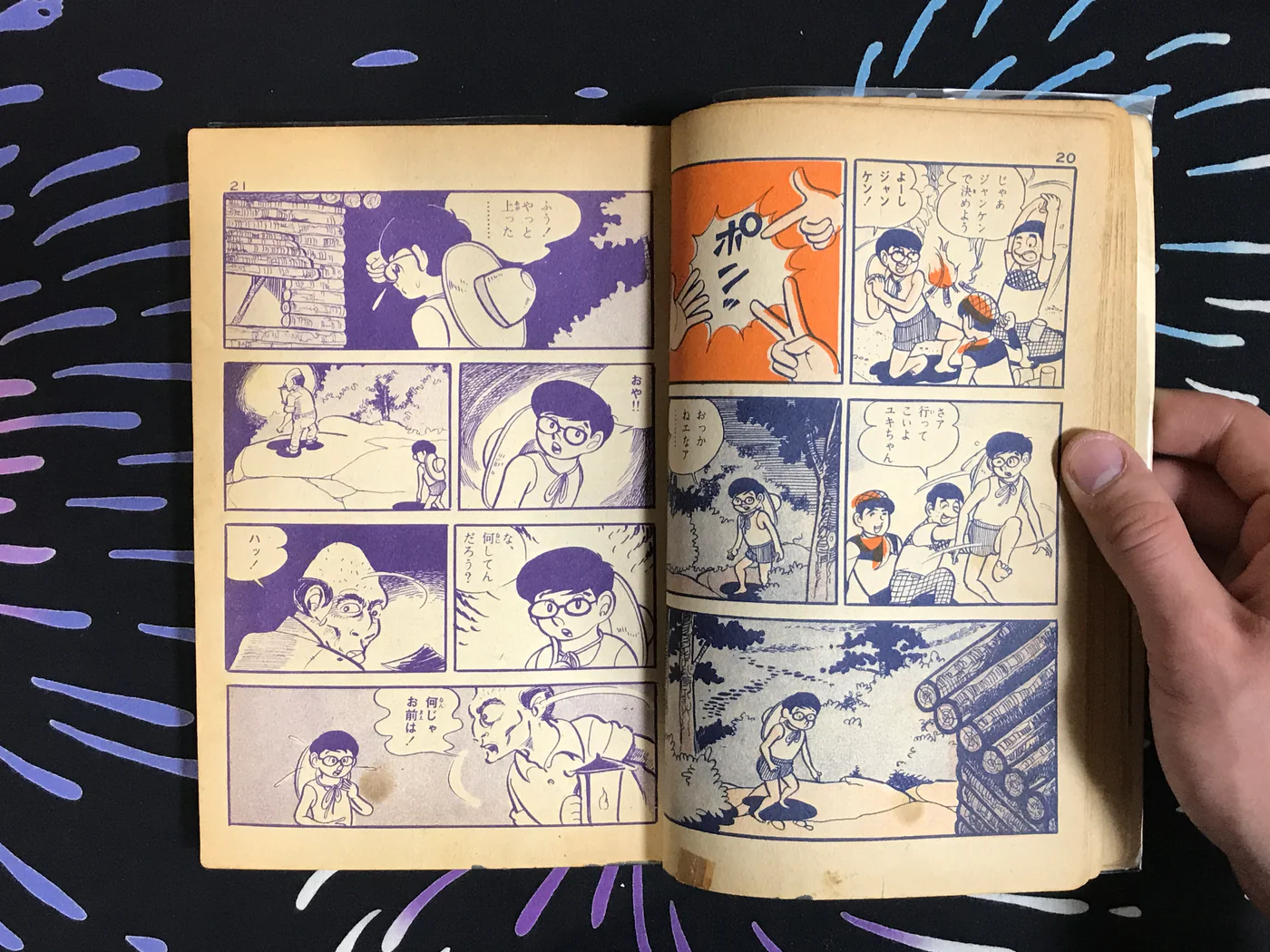
Since the magazine’s launch was initially set to be bi-weekly, it was decided that the length of the works would be 31 pages for dramas and 15 pages for comedies. The publication would feature few fixed series at its start; with only a few months left until the debut, the rookie authors contacted were not yet ready to launch a series in July. The solution found was to compose most of the issues with One-Shots.
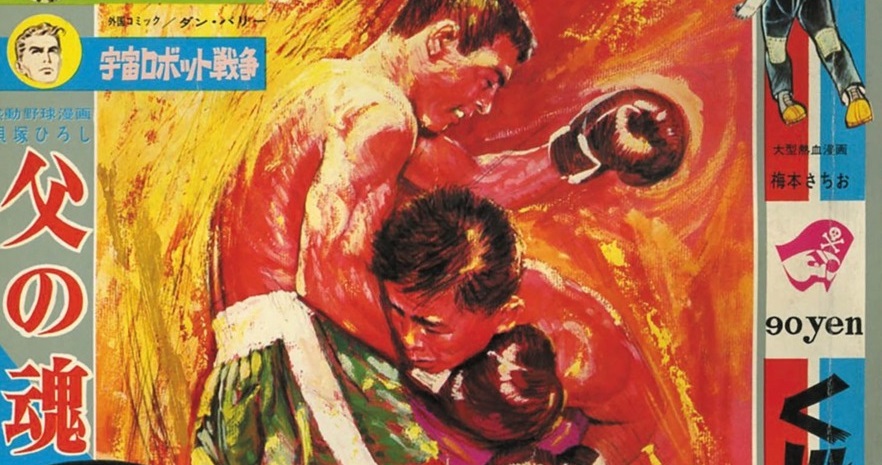
In fact, for the first seven issues, only four authors capable of starting a series were selected, and only two of them—both coming from Shonen Book—had the stamina to maintain a bi-weekly pace: Sachio Umemoto and Hiroshi Kaizuka. These two became the fundamental pillars of Shonen Jump’s embryonic phase. The editorial team chose to have them headline the debut issue, as both had achieved moderate success in Shonen Book but did not yet possess a level of fame that would make their manuscripts expensive.
“Manga only, One-Shots only, the Shinkansen of manga”—this was the motto of Weekly Shonen Jump. Launched in 1964, the high-speed train (Shinkansen) was still a high-cost service largely inaccessible to most Japanese people. Nagano’s logic in coining this motto was to allow children, who dreamed of boarding the train, to feel that same adrenaline by diving into the speed of the magazine’s manga. Simultaneously, the association with the Shinkansen gave the product an aura of sophistication and prestige.
The search for promising talent intensified rapidly, with about ten authors visiting the Shueisha building every day. Nagano granted these artists the freedom to use the publisher’s cafeteria; as many lived in poverty and struggled to feed themselves properly, Shigeo Nishimura reports in his work that the eyes of these young men shone at the opportunity to eat as much as they wanted.
For Nishimura, the art of creating manga resembled boxing: it was fueled by “hunger.” In his view, it was the humblest artists—those seeking social mobility through art—who succeeded as professionals. He believed that the greater an author’s wealth, the lower their chances of prospering in their career. It was precisely this urgency to transform one’s own reality that made the manga so vivid and innovative, with each author pouring the pain of their own soul into the production.
However, just months before the launch, maintaining only four members on the editorial staff became unfeasible. There were not enough editors to meet the workload demands, and even the collection of manuscripts faced hurdles. Reassigning professionals from other sectors was considered, but Seventeen magazine, whose launch had been a massive success, was absorbing a large portion of Shueisha’s workforce. The solution was the hiring of new editors.
While a permanent editor received a salary of 42,000 yen plus benefits like transportation vouchers, meal vouchers, and social security, Shonen Jump did not have the budget for new full-time hires. Thus, the choice was made to hire three freelance editors with a salary of 30,000 yen (27,000 after taxes) and no rights to any benefits—a value considered low for the level of effort required.
Deputy Editor-in-Chief Nakano, bothered by the low salaries and precarious conditions, confronted Tadasu Nagano, who simply ordered him to find “someone who would accept such terms.” In that post-war historical context, financial necessity forced many young people to accept any payment to survive. As reported by Nishimura, Nakano realized at that moment that Nagano managed the team in a calculating and even cruel way, treating employees as disposable parts in pursuit of the company’s goals.
Although the three new freelance editors were hired and worked harder than the permanent staff—which heightened Nakano’s sense of guilt—the promises of permanent employment made by Nagano never materialized. Years later, they moved to other departments, such as Weekly Playboy. For Nagano, it was acceptable to offer low salaries based on promises of future promotion; for Nakano, such a practice was inadmissible. He argued it would be better to hire just one professional with a dignified salary than to subject workers to near-unpaid regimes for corporate ends.
In practical terms, however, the presence of these new editors was what allowed the magazine to be ready for its debut in July 1968.
Preview of Part 2
In the second part of this series, to be published next week, we will cover the second half of 1968, spanning the period from June to November (it is worth noting that the editorial calendar ends in November, not December).
In this continuation, we will detail the official launch of the magazine, the debut of series that became legendary, and the milestones that defined the publication’s first months of life. Don’t miss it!