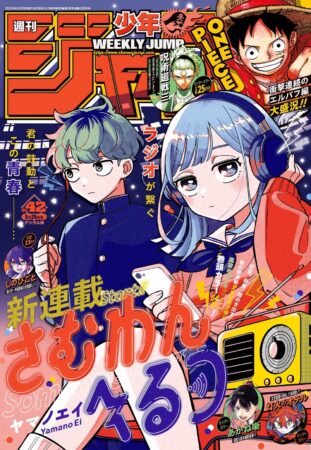
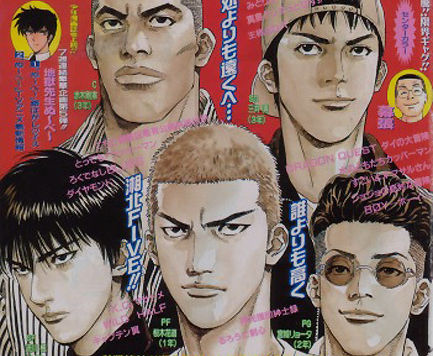
On June 17, 1996, Weekly Shonen Jump #27 hit Japanese newsstands. What should have been an issue celebrating the conclusion of the first part of one of the magazine’s most important manga instead became a historic moment — an edition that would forever mark the “END OF THE GOLDEN ERA” of Weekly Shonen Jump: the day Slam Dunk ended.
Before discussing that day and its consequences, let’s recall the state of the magazine in 1996. That year was a complicated one for Shonen Jump. After many years of continuous growth, the endings of Yu Yu Hakusho in 1994, Dragon Ball in 1995, and several second-tier series led the magazine into a decline in sales. This, combined with an internal crisis that began in 1993 with the promotion of Nobuhiko Horie to Editor-in-Chief, created a bitter atmosphere in the early months of that year.
Between 1968 and 1995, Weekly Shonen Jump saw its sales increase year after year (with the exception of 1986), rising from 105,000 copies in circulation in 1968 to 6.5 million in 1995. The conclusion of these two manga (especially Dragon Ball), which were considered the magazine’s “pillars,” resulted in a 10.7% drop in sales. Weekly Shonen Jump lost 700,000 readers between 1995 and 1996, falling from 6.5 million copies to 5.8 million. This decline deeply worried Jump’s administrative board, especially as they saw the then Editor-in-Chief, Nobuhiko Horie, as someone incapable of resolving the situation.
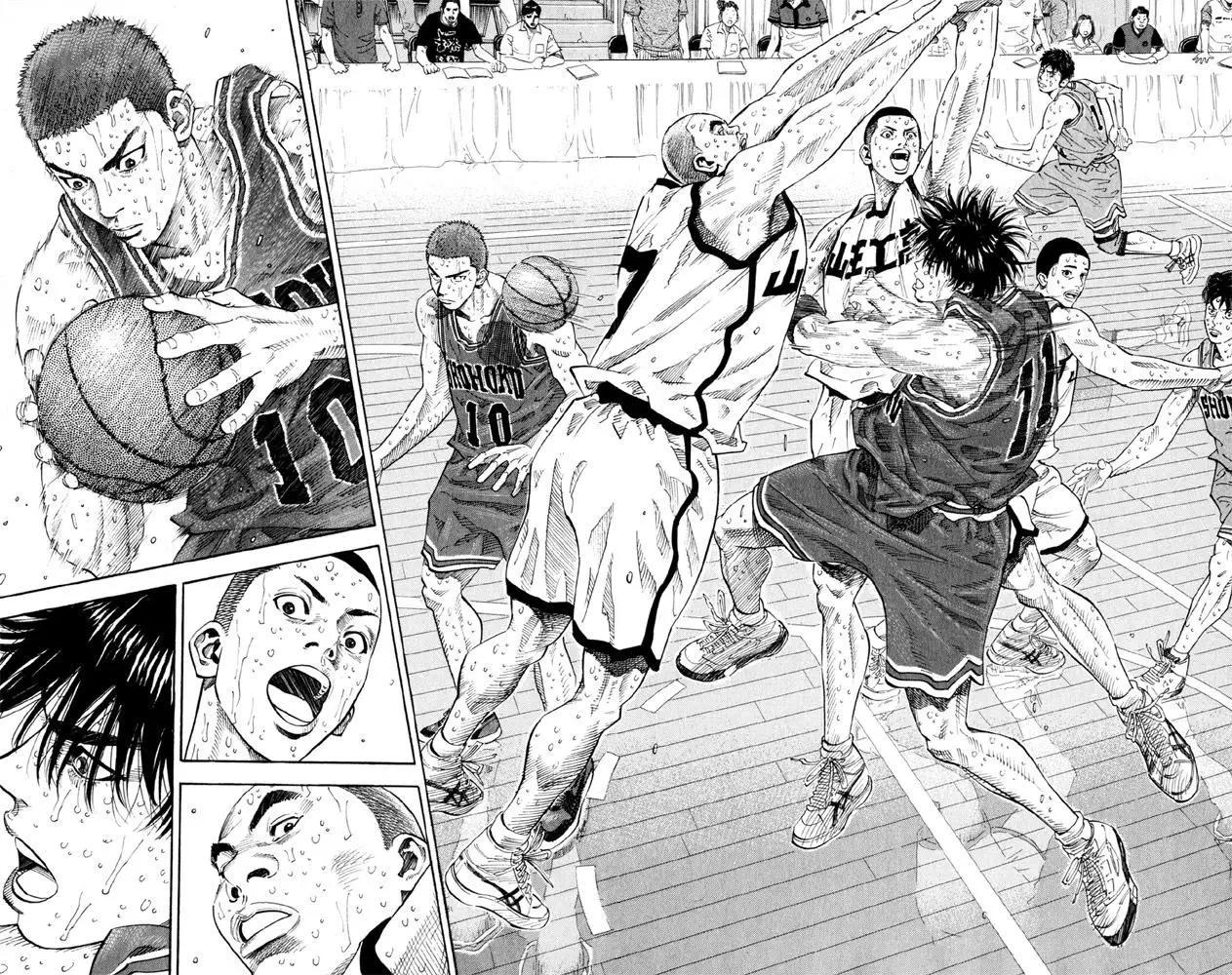
At the same time, however, the board still held onto hope that the drop in sales could be reversed, because the success of Slam Dunk was nothing short of spectacular. Volume 23 of the basketball manga, released in March 1995 — one year before the series ended— had set the record for the largest initial print run in manga history, with 2.5 million copies. A record that would only be surpassed in 2002 by volume 24 of ONE PIECE. That level of success was a blessing for Shonen Jump, which saw Inoue’s series as a firmly established pillar. It seemed they still had plenty of time to find a successor to Dragon Ball.
And that time was crucial for the administrative board, which had just dismissed Editor-in-Chief Horie in February 1996 to replace him with someone more capable of revitalizing the magazine. That is why the newly promoted Kazuhiko Torishima placed so much faith in Slam Dunk. It was a “ROCK” in the middle of an unstable magazine. Aware of its importance, the Editor-in-Chief likely decided to give the manga the cover of Weekly Shonen Jump #27. It was meant to celebrate a “temporary ending” and make it clear that Slam Dunk would return. However, something caught both readers and editors completely off guard: the ending of Slam Dunk WAS FINAL.
FINAL?
Let me explain this clearly. Unlike the final volume of the series, released in October 1996, Weekly Shonen Jump #27 — which featured the last chapter of Slam Dunk — contained a very important message. In that issue, chapter 276 had the words: “End of Part 1” printed on its pages. Because of this, many readers — and even the editors themselves — did not believe Slam Dunk had truly ended. They thought they were only witnessing the conclusion of the FIRST PART [1]. But reality turned out differently: in volume 31, this note was REMOVED, and the series came to a complete and definitive end.
The sudden conclusion even led some readers to believe, for a few days, that Slam Dunk might have been canceled. After all, how could a manga so popular and so well-crafted just end out of nowhere? It was from this confusion that the baseless theory emerged that the series had “ended due to copyright issues.”
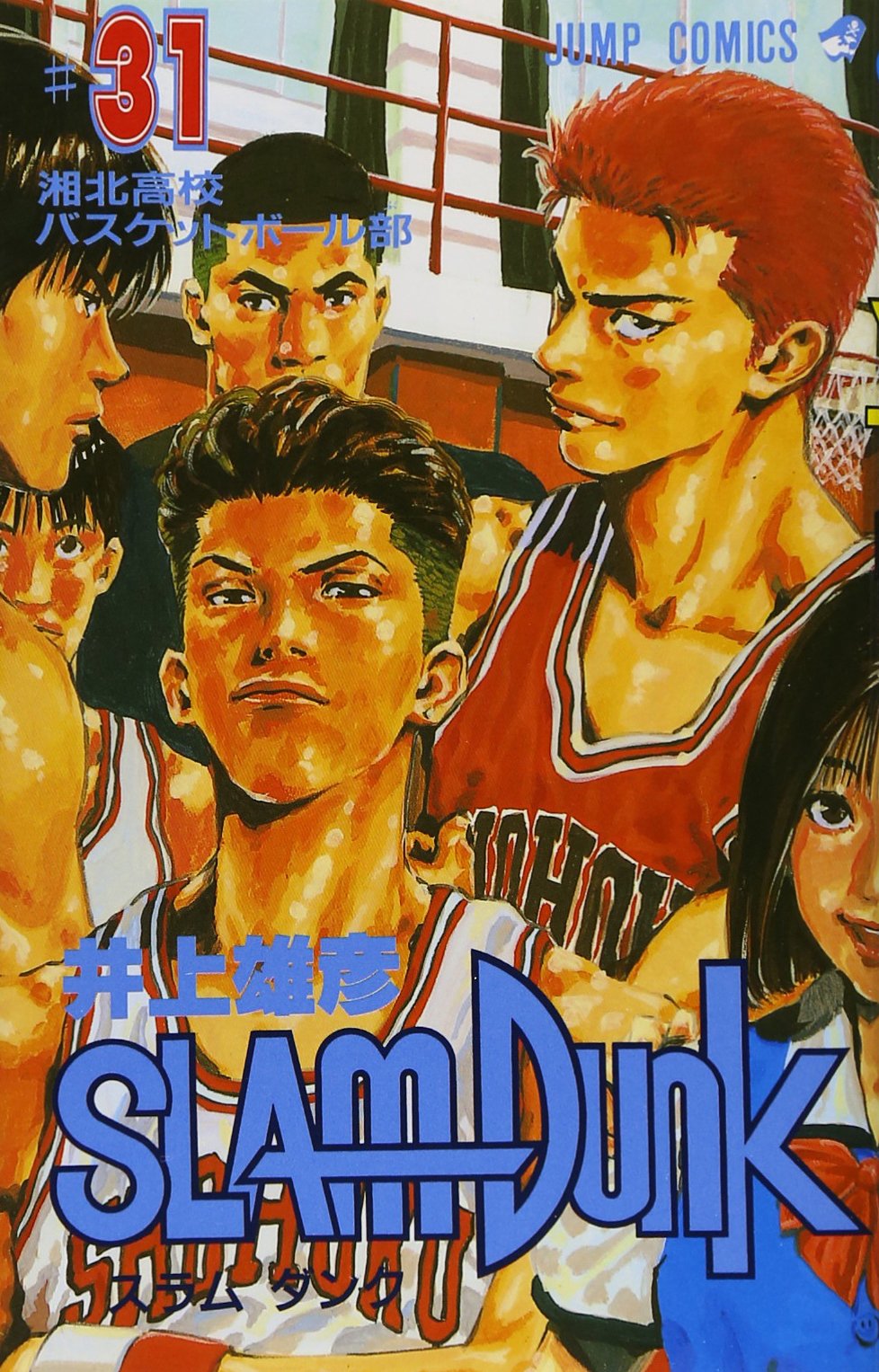
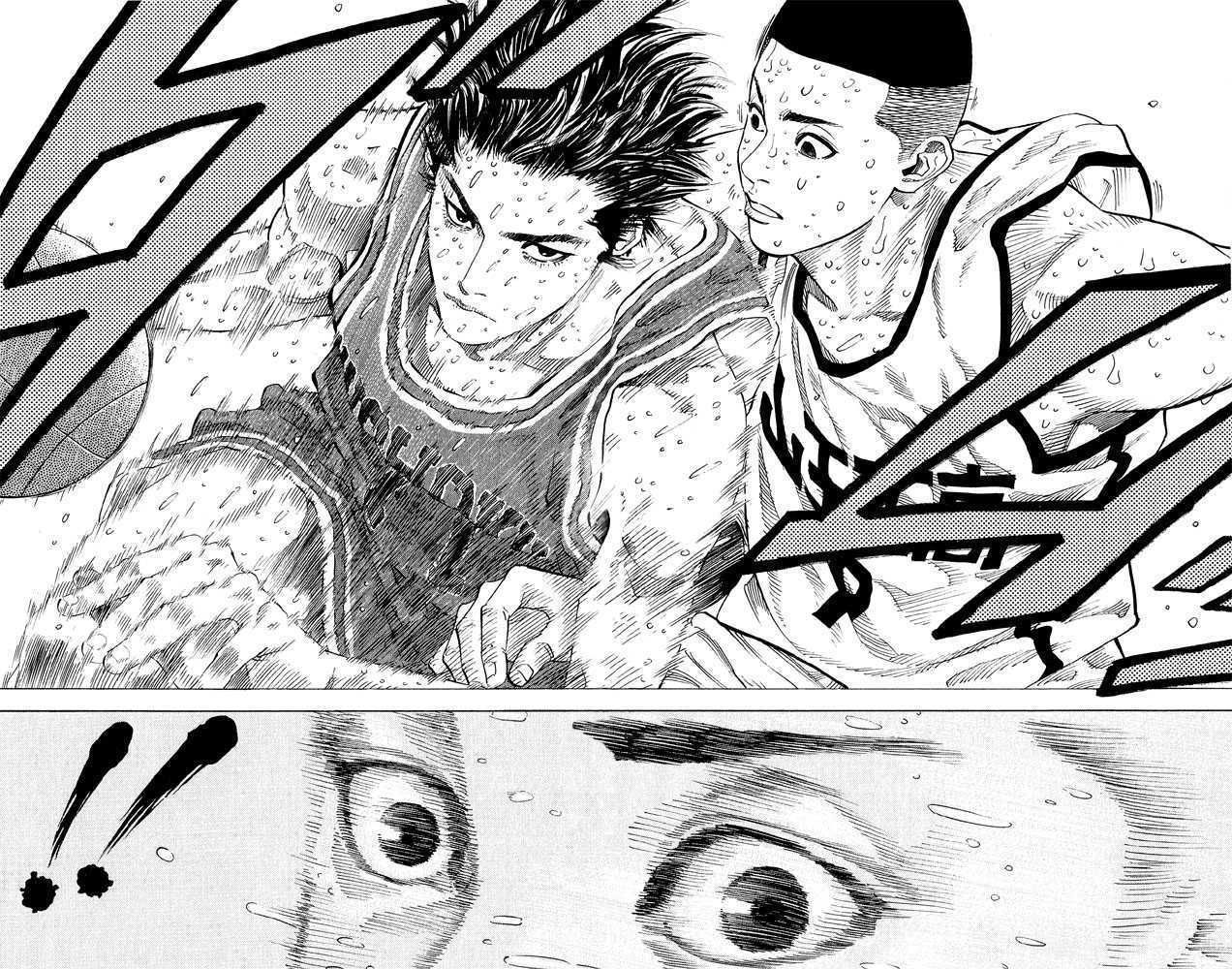
But in my view, the ending of Slam Dunk isn’t really that abrupt — it is the result of a series reaching its absolute peak in quality, and of an author realizing that there is no way to surpass that peak, even if there was still room to continue at a lower level — as Takehiko Inoue himself has mentioned in some of his interviews. The problem is that neither editors nor readers could perceive this. It was something only Inoue knew. Only he understood that, after that game, Slam Dunk could never deliver a match as good again. And so, even as the most popular manga on the market, and even with several loose ends, Slam Dunk came to an end.
This “ending” caused a major upheaval within the magazine and exposed all the organizational problems that had been ignored due to its high sales. The evidence that the magazine was facing serious internal issues can be seen in three key points:
- In February 1996, the recently appointed Editor-in-Chief Nobuhiko Horie had been dismissed for failing to find strong new series, for not knowing how to manage the existing ones (for example, he failed to properly prepare for the end of Dragon Ball), and for having a terrible relationship with the administrative board.
- The fact that Slam Dunk ended with a COVER (something that had never happened with any series before), and that this ending was presented as “The End of Part 1.” Considering that the magazine neither announced nor prepared for the definitive conclusion of the work—but rather for the end of its first part—it suggests that the newly appointed Editor-in-Chief Toshimura was not even aware of the series’ final ending, in a situation somewhat similar to what had happened with Dragon Ball.
The magazine’s sales plummeted after June 17, 1996 — and even more so once it truly “sank in” in October that Slam Dunk would not be returning. Weekly Shonen Jump, which had sold 5.8 million copies in 1996, dropped to just 4 million in 1997, losing 1.8 million readers — a 31% decline in its audience. As a result, Weekly Shonen Jump #27 became a historic landmark in the manga world, as it marks the end of the magazine’s “Golden Age.” From that point onward, it would never again surpass 4 million copies in circulation, ultimately losing a total of 2.9 million readers during this period (44% of its audience).
Many readers were no longer interested in continuing to follow the biggest shonen magazine. There was no more Yu Yu Hakusho, no more Dragon Ball, no more Slam Dunk, and Dragon Quest would also come to an end in December 1996. Rurouni Kenshin was interesting, and Hoshin Engi, which debuted in WSJ #28, was somewhat promising — but for a portion of the audience, it simply wasn’t enough. June 17, 1996, therefore, left many readers disheartened and became a heavy blow to Shonen Jump, which saw its reign begin to crumble.
At the same time, however, it also marked the beginning of that reign’s renewal. With the end of Slam Dunk, Torishima saw an opportunity to reinvent the magazine. It was time to flip the table and rebuild Weekly Shonen Jump from ZERO—with new manga, a new logo, and a new organizational structure.
And so, the revolutionary Torishima ushered in what became known as the “Iron Age,” launching a wave of highly successful series, including ONE PIECE, Naruto, Bleach, Hunter x Hunter, Hikaru no Go, Yu-Gi-Oh, Tennis no Ouji-sama, and many others. Through this, he managed to stabilize the magazine’s sales and, by 2001, handed over to his successor a Weekly Shonen Jump that was far more organized, resilient, and healthy.
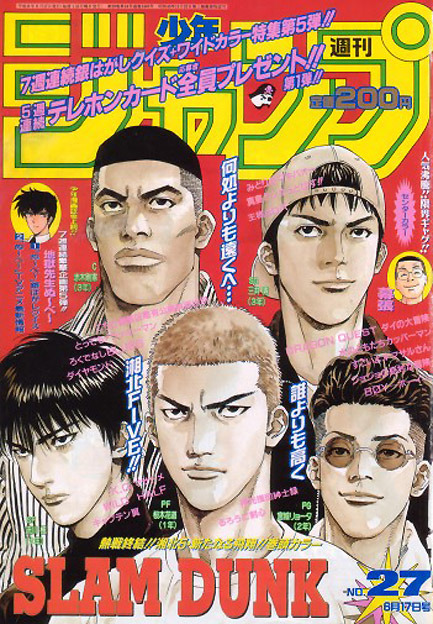
Table of Contents — Weekly Shonen Jump #27 (June 17, 1996)
Slam Dunk c276 (Cover, Opening Color Page, and End of Part 1)
1 – KochiKame c977
2 – Rurouni Kenshin c104
3 – BOY c171
Makuhari c16 (Color Page)
4 – Jigoku Sensei Nube c135
5 – Sexy Commando Gaiden c25
6 – Rokudenashi Blues c390
7 – Midori no Makibao c75
8 – Wild Half c22
9 – Majima-kun Suttobasu!! c64
10 – Captain Tsubasa: World Youth Saga c105
11 – Dragon Quest: Dai no Daiboken c320
12 – JoJo’s Bizarre Adventure c463
13 – Tottemo! Luckyman c137
Diamond c6
K.O. Masatome c5
14 – Jinko Ningen-dan Shinshiroku c15
15 – Mizu no Tomodachi Kappaman c32
16 – Osama wa Roba c109